
What After Board Exams? Why CUET Matters and How Students Should Choose Their Future Path
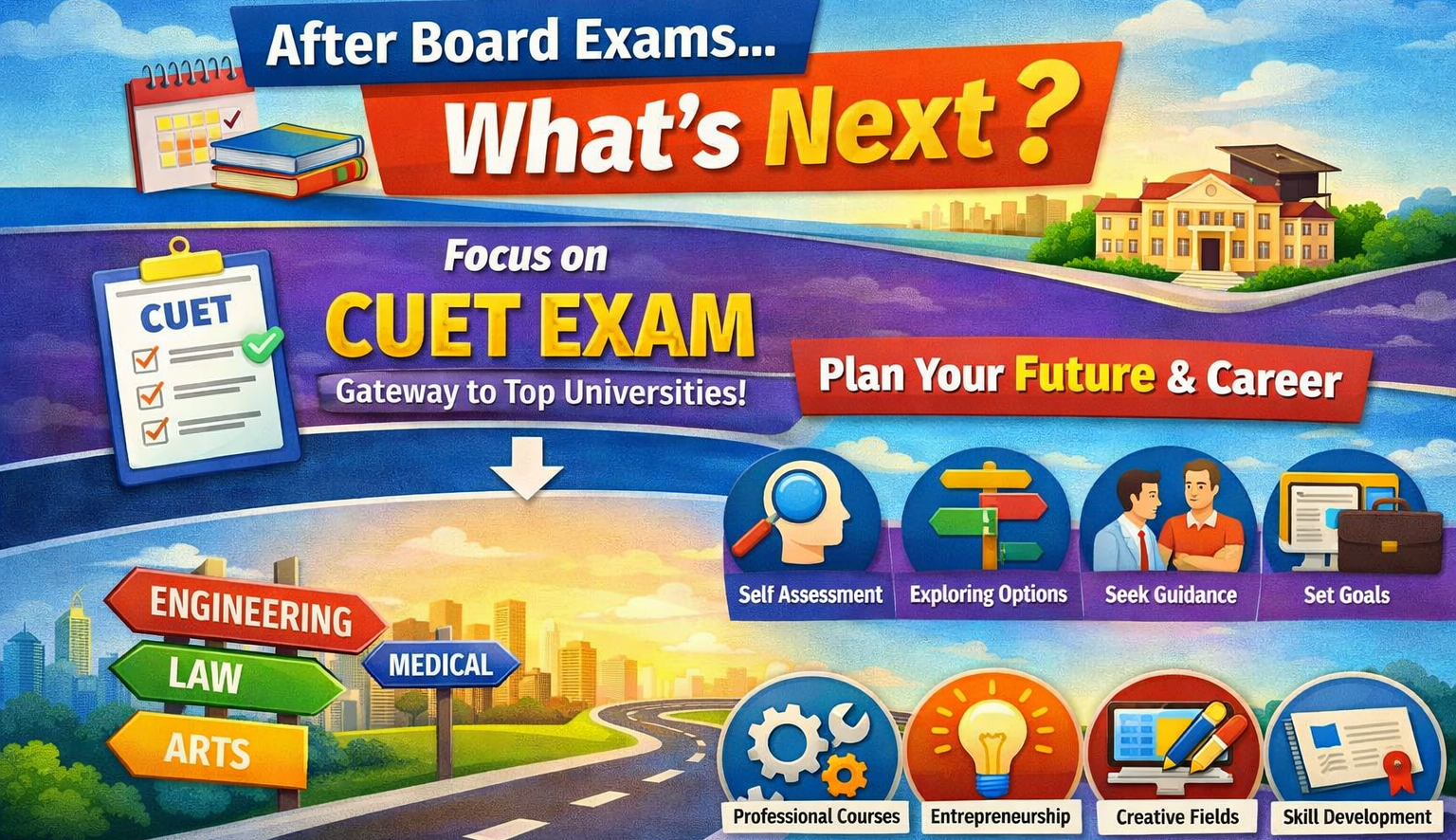
As the CBSE, ICSE, and various State Board examinations wrap up across the country, lakhs of students find themselves at a crucial turning point. For months, life revolved around textbooks, revisions, and exam schedules. Now, a new question takes center stage: What next?
This phase is not just about waiting for results—it is about making informed decisions that will shape your academic and professional future.
The Transition Phase: More Than Just a Break
After board exams, many students feel a mix of relief and uncertainty. While it is important to take some time to relax and recharge, this period should also be used productively. It is the right moment to explore options, understand career paths, and prepare for upcoming entrance exams.
One of the most significant developments in recent years is the introduction and growing importance of the CUET (Common University Entrance Test).
Understanding CUET and Its Importance
CUET has become a central gateway for admission into many top universities in India. Instead of relying solely on board exam percentages, universities now use CUET scores to ensure a more standardized and fair selection process.
Why CUET matters:
Equal Opportunity: Students from different boards are evaluated on the same platform.
Reduced Pressure on Board Marks: Your future is no longer dependent only on your board exam scores.
Access to Top Universities: Many prestigious central and participating universities consider CUET scores for admission.
Subject Flexibility: Students can choose domain-specific subjects aligned with their career goals.
Preparing for CUET requires a strategic approach—understanding the syllabus, practicing mock tests, and focusing on conceptual clarity.
Choosing the Right Career Path
This is one of the most critical decisions in a student’s life. Rather than following trends or peer pressure, students should make choices based on their interests, strengths, and long-term goals.
Steps to make an informed decision:
Self-Assessment
Identify your interests and passions.
Evaluate your strengths and weaknesses in different subjects.
Explore Career Options
Research fields such as engineering, medicine, law, business, humanities, design, and emerging careers like data science or digital marketing.
Understand the skills and qualifications required for each field.
Seek Guidance
Talk to teachers, career counselors, and professionals.
Attend career webinars and workshops.
Align with Future Goals
Think long-term: Where do you see yourself in 5–10 years?
Choose a path that aligns with both your passion and practical opportunities.
Balancing Passion and Practicality
While passion is important, students should also consider factors like job opportunities, industry growth, and skill demand. The ideal career lies at the intersection of:
What you love
What you are good at
What the world needs
Alternative Pathways to Consider
Not every student needs to follow the traditional route. Today, there are multiple pathways available:
Skill-based courses
Professional certifications
Entrepreneurship
Vocational training
Creative fields like content creation, design, and media
The key is to stay open-minded and adaptable.
Click Here to connect with our expert counsellor for FREE