Best Programming Languages to Learn in 2026: A Complete Guide for Students
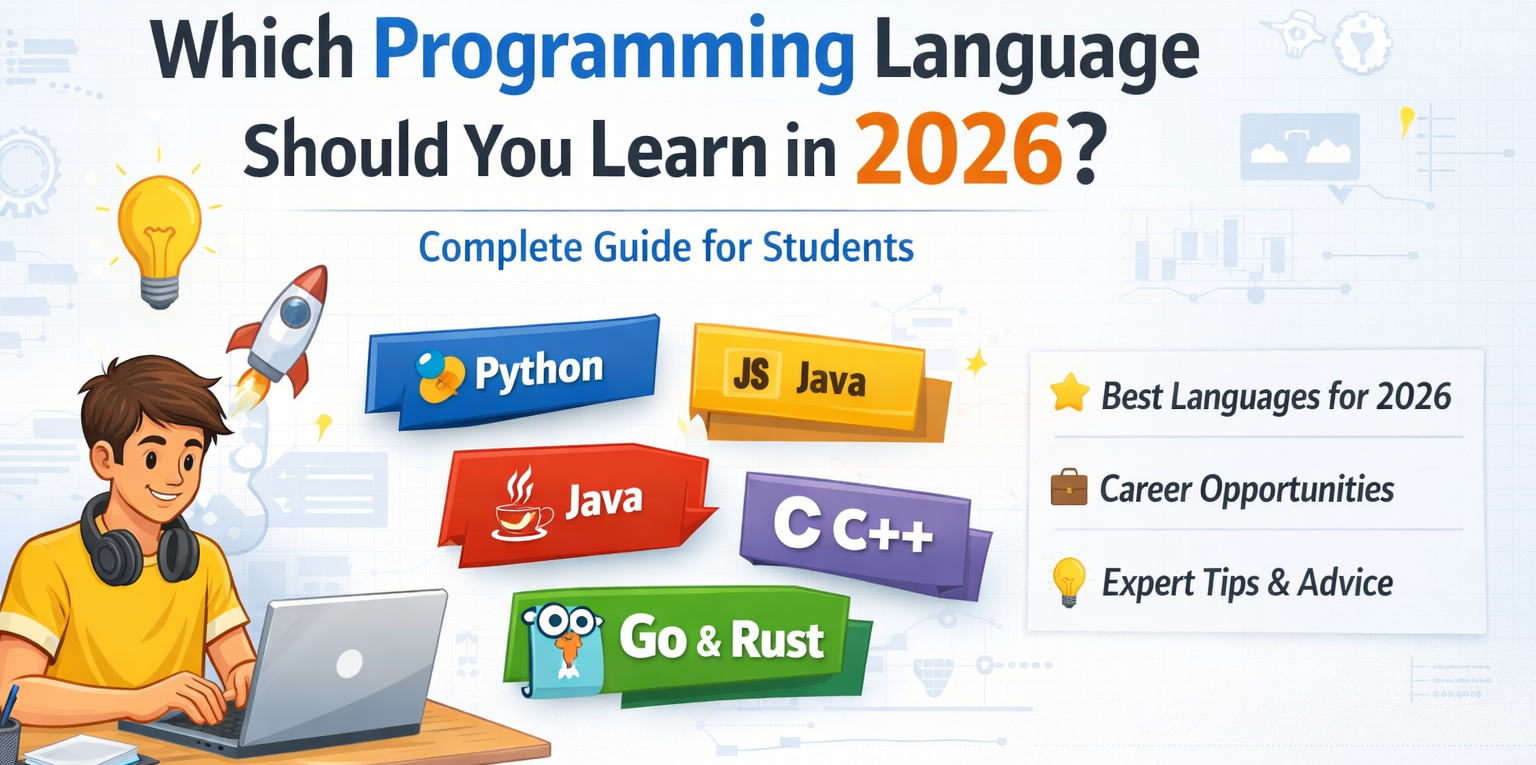
In today’s fast-changing digital world, learning a programming language has become one of the most valuable skills a student can acquire. As we step into 2026, the demand for skilled developers is growing rapidly across almost every industry. From start-ups to multinational companies, organizations are actively searching for talented programmers who can build, manage, and innovate digital solutions. This rising demand has made one question extremely important for beginners: what are the best programming languages to learn?
Choosing from the many available options can be confusing, especially for students who are just starting their journey. The reality is that it depend on your career goals, interests, and the field you want to enter. However, there are certain languages that clearly stand out in 2026 due to their popularity, demand, and future scope.
Why Choosing the Best Programming Languages Matters
Selecting the programming languages at the beginning of your journey can save you time, effort, and confusion. Many students make the mistake of randomly picking a language without understanding its use case. Instead, you should focus on languages that align with industry demand and your long-term goals.
The right choice not only helps you learn faster but also opens doors to better career opportunities. Whether you aim to become a web developer, data scientist, software engineer, or freelancer, choosing the best programming languages is the first step toward success.
Top Programming Languages to Learn in 2026
Let’s explore some of the best programming languages that are dominating the tech industry in 2026.
1. Python – The Best Starting Point
Python continues to be one of the best programming languages for beginners. Its simple syntax and easy readability make it ideal for students who have no prior coding experience. Python is widely used in artificial intelligence, machine learning, data science, and automation.
Because of its versatility and future demand, Python is often considered among the best programming languages for long-term career growth.
2. JavaScript – Essential for Web Development
If you are interested in building websites or web applications, JavaScript is one of the best programming languages you can learn. It is the backbone of modern web development and is used for both frontend and backend development.
With technologies like Node.js and frameworks like React, JavaScript remains one of the best programming languages for creating dynamic and interactive applications.
3. Java – A Stable Career Choice
Java has been a reliable choice for decades and continues to be one of the best programming languages for students seeking stability. It is widely used in large-scale enterprise applications and Android app development.
Due to its strong presence in the corporate world, Java remains one of the best programming languages for securing long-term job opportunities.
4. C++ – Build Strong Logic and Problem-Solving Skills
C++ is one of the best programming languages for developing strong programming fundamentals. It is widely used in competitive programming and technical interviews.
Learning C++ helps students understand data structures and algorithms deeply, making it one of the best programming languages for improving logical thinking.
5. Go and Rust – The Future of High Performance
Newer languages like Go and Rust are quickly becoming some of the best programming languages for modern software development. These languages are designed for performance, efficiency, and scalability.
As industries move toward faster and more secure systems, Go and Rust are emerging as best programming languages for future technologies.
Common Mistakes Students Should Avoid
While choosing the best programming languages is important, avoiding common mistakes is equally crucial. Many beginners struggle not because of the language they choose, but because of how they approach learning.
One major mistake is trying to learn multiple languages at the same time. This often leads to confusion and lack of clarity. Instead, focus on mastering one of the best programming languages before moving to another.
Another mistake is ignoring practical implementation. Coding is a skill that improves with practice, not just theory. Students who focus only on reading or watching tutorials without coding often fail to gain confidence.
Lack of consistency is also a common issue. Even if you choose one of the best programming languages, irregular practice will slow your progress. Daily coding, even for a short time, is more effective than occasional long sessions.
Finally, many students avoid building projects. Real-world projects help you apply your knowledge and make your learning meaningful. Working on projects using the best programming languages strengthens your understanding and prepares you for real job scenarios.
Why You Should Start Coding in 2026
There has never been a better time to start learning the best programming languages than now. The opportunities in the tech industry are expanding rapidly, and skilled programmers are in high demand.
One of the biggest advantages is high-paying career opportunities. Developers are among the highest-paid professionals globally, and mastering the best programming languages can significantly boost your earning potential.
Another major benefit is the flexibility of work. Many companies now offer remote work options, allowing you to work from home. Learning the best programming languages also enables you to explore freelancing and earn a side income.
Additionally, coding skills provide global opportunities. You are not limited to local jobs; you can work with international clients or companies from anywhere in the world.
Moreover, programming skills empower you to build your own projects, startups, or digital businesses. By learning the best programming languages, you gain the ability to turn your ideas into reality.
Final Thoughts
In 2026, coding is no longer just an optional skill—it is a necessity for students who want to succeed in the digital age. Choosing the best programming languages is the first step, but success depends on consistent practice, patience, and real-world application.
Start with one language, build strong fundamentals, and gradually expand your skills. Remember, it’s not about learning everything at once but mastering the right things at the right time.
If you stay focused and dedicated, learning the programming languages can open countless doors for your future career and personal growth.
Click Here to check all computer courses.