Regular Learning vs Distance Learning: A Complete Guide for Students
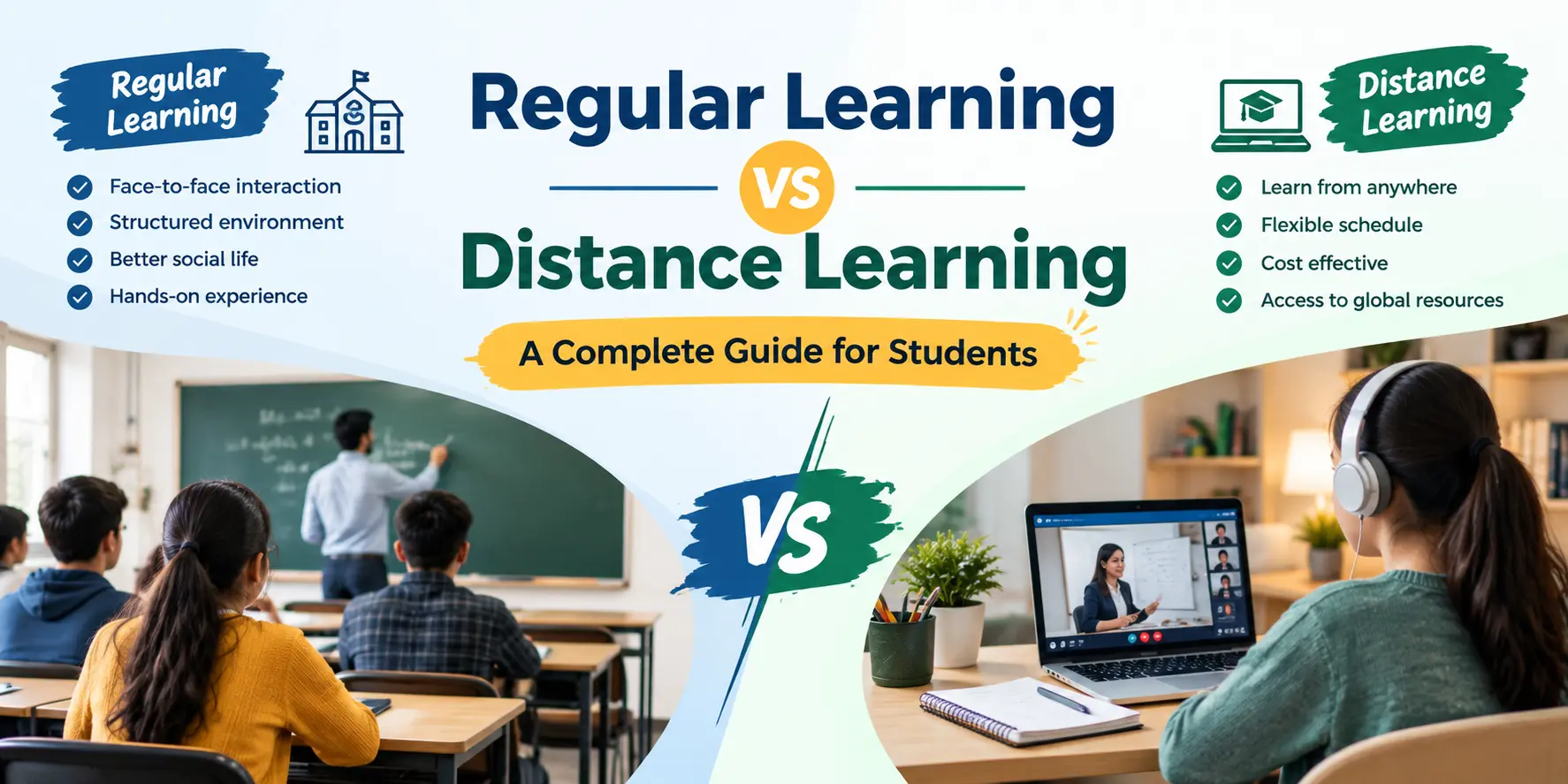
Choosing the right mode of education is one of the most important decisions a student can make. While traditional classroom-based education has been the preferred route for many years, distance learning has become a practical and widely considered alternative for students, working professionals, entrepreneurs, parents and learners who need greater flexibility.
The debate around regular learning vs distance learning is not about deciding which method is universally better. Both approaches offer valuable advantages, but they serve different learning styles, schedules and career objectives. The right choice depends on your personal circumstances, preferred study environment, financial situation and long-term goals.
Regular learning offers face-to-face interaction, a fixed academic routine and direct access to campus facilities. Distance learning, on the other hand, allows students to pursue recognised programmes without relocating or leaving their existing responsibilities. With the growth of digital platforms, structured study material and academic support systems, distance education has become more organised and accessible than ever.
If you are unsure which option is right for you, this guide will help you understand the key differences and benefits of both learning modes.
What Is Regular Learning?
Regular learning refers to the traditional classroom-based education system. Students attend lectures physically at a college or university campus according to a fixed timetable. They participate in classroom discussions, practical sessions, examinations, events and other campus activities.
This method is commonly chosen by students who have recently completed school and want a structured college experience. It is also suitable for learners who prefer direct interaction with professors and classmates.
Benefits of regular learning
Regular classroom attendance creates a predictable study routine.
Students can interact directly with teachers and classmates.
Practical subjects may benefit from laboratories, workshops and campus facilities.
Learners can participate in clubs, seminars, sports and cultural activities.
Immediate classroom discussion can make it easier to ask questions.
Students may find it easier to build friendships and professional networks.
Campus exposure can help develop communication, teamwork and leadership skills.
For many young students, regular college is more than an academic experience. It is also a period of personal development, independence and social interaction.
However, regular education also requires students to follow a fixed schedule. Relocation, transportation, accommodation and daily attendance can add to the overall cost and time commitment. These factors may make traditional education difficult for working professionals, business owners, homemakers or students living far away from suitable institutions.
What Is Distance Learning?
Distance learning is an education model in which students study without attending a physical classroom every day. Universities typically provide learning material through printed books, digital resources, learning management systems, recorded lectures, online sessions and academic support channels.
Distance education can be especially useful for learners who cannot attend a campus regularly. A student may study from home, a workplace or another location while managing employment, family responsibilities or other commitments.
Distance learning is not the same as studying without guidance. A quality programme usually includes course material, assignment support, examination instructions, academic counselling and access to university services. The exact structure depends on the university and programme.
In India, students should always verify whether the university and specific programme have the required recognition or approval before enrolling. The UGC Distance Education Bureau is responsible for regulatory processes related to recognised Open and Distance Learning programmes. For the 2026–27 cycle, UGC opened an application window for eligible higher educational institutions seeking recognition for ODL and online programmes.education.economictimes.indiatimes
Regular Learning vs Distance Learning
The most important difference between regular and distance education is the learning environment. Regular students generally learn within a physical campus, while distance learners access education through self-study and digital or printed resources.
| Factor | Regular learning | Distance learning |
|---|---|---|
| Study location | Physical campus | Home, workplace or any suitable location |
| Schedule | Usually fixed | More flexible |
| Attendance | Often mandatory | Generally limited or programme-specific |
| Teacher interaction | Face-to-face | Online, phone, email or scheduled counselling |
| Cost | May include travel, accommodation and campus expenses | Often more economical, depending on programme |
| Suitable for | Students seeking a structured campus experience | Working professionals and flexible learners |
| Learning style | Classroom-led | Self-paced and resource-led |
| Relocation | May be required | Usually not required |
| Time management | Institution-led | Student-led |
| Campus life | Strong campus exposure | Limited or virtual campus interaction |
Neither method should be judged only by its format. The quality of education depends on the university, curriculum, faculty, assessment system, student support and recognition of the programme.
Advantages of Distance Learning
Distance learning has gained popularity because it reduces several barriers that prevent students from continuing their education.
1. Study while working
One of the biggest benefits of distance education is the ability to continue working while pursuing a degree. Professionals can improve their qualifications without taking a career break.
For example, a sales executive may pursue an MBA while continuing a full-time job. A teacher may enrol in a postgraduate programme to become eligible for a senior role. An entrepreneur may study business management while running a company.
This combination of work and education can also help students connect academic concepts with real workplace situations.
2. Flexible study schedule
Distance learners usually have greater control over when and where they study. They can create a schedule around work shifts, family duties, travel or personal commitments.
A flexible schedule is especially useful for:
Working professionals.
Parents and homemakers.
Entrepreneurs and freelancers.
Students with health or mobility limitations.
Learners living away from major education centres.
Students preparing for competitive examinations or professional certifications.
Flexibility does not mean that distance learning requires less effort. It means the learner has more control over managing that effort.
3. Reduced relocation and travel costs
Regular education may involve tuition fees as well as transport, hostel fees, rent, food and other daily expenses. Distance learning allows students to remain in their current city in many cases.
This can make higher education more accessible to learners who cannot afford relocation or who have personal responsibilities in their hometown.
4. Access to more programmes
Students may not always find their preferred programme at a nearby college. Distance education can provide access to programmes offered by universities located in other cities or states.
Before applying, students should check the admission requirements, programme availability, examination process, learning resources and recognition status.
5. Development of self-discipline
Distance learning encourages students to take responsibility for their academic progress. They must plan study hours, complete assignments, revise course material and prepare for examinations.
These habits can strengthen skills that employers value, including:
Time management.
Self-motivation.
Independent research.
Digital communication.
Planning and accountability.
6. Career progression
A relevant degree or qualification may help professionals become eligible for promotions, career changes or higher-level roles. Distance learning can be a practical option for people who want to upgrade their education without leaving employment.
The outcome will depend on several factors, including the student’s work experience, programme relevance, skills, academic performance and employer requirements.
Advantages of Regular Learning
A balanced comparison must also recognise the strong benefits of traditional education.
1. Structured academic routine
Regular students follow a timetable that creates consistency. Scheduled classes, internal assessments and attendance requirements can help learners stay on track.
This structure can be beneficial for students who find it difficult to study independently or maintain a routine.
2. Direct classroom interaction
Face-to-face teaching allows students to ask questions and receive immediate responses. Classroom discussions may also encourage debate, collaboration and deeper understanding.
This can be particularly helpful for subjects that involve practical demonstrations, group work or frequent faculty guidance.
3. Campus experience
College life allows students to participate in student organisations, competitions, workshops, internships, cultural events and networking opportunities.
These experiences can support personal growth and help learners build relationships with peers, faculty members and industry visitors.
4. Practical exposure
Some programmes require regular access to laboratories, equipment, studios or other facilities. For such courses, students should carefully evaluate whether regular attendance is necessary for effective learning.
Distance education can still include practical components in selected programmes, but the structure varies by university and subject.
5. Immediate peer support
Regular learners interact with classmates every day. They can form study groups, exchange notes and work together on projects.
For students who learn best through group interaction, the campus environment can provide valuable motivation.
Is Distance Learning Good for Working Professionals?
Distance learning can be an effective option for working professionals when the programme is selected carefully and the learner follows a realistic study plan.
Before enrolling, consider:
Whether the programme matches your career objective.
Whether the university and programme have appropriate recognition.
Whether examinations are conducted according to official requirements.
Whether the curriculum is updated and industry-relevant.
Whether study material and academic support are available.
Whether you can consistently dedicate time each week.
Whether the qualification meets your employer’s requirements.
A distance degree should not be selected only because it is convenient. The best programme is one that combines flexibility with academic credibility, proper support and relevance to your goals.
Common Misconceptions About Distance Education
“Distance learning means no teacher support”
A recognised distance programme may provide academic counselling, digital lectures, learner support centres, email assistance, discussion forums and other forms of guidance. Support differs across universities, so students should ask for complete details before admission.
“Distance degrees are automatically easier”
Distance education often requires stronger self-discipline. Students may have fewer daily reminders than campus learners, so they must manage their own progress.
“Only students with low marks choose distance learning”
Students choose distance education for many reasons. Some are working, some have family responsibilities, some want a second qualification, and others need a programme that does not require relocation.
“All distance programmes are the same”
They are not. Universities differ in curriculum, recognition, fees, learning platform, examination method, faculty support and student services. Conducting proper research is essential.
How to Choose Between Regular and Distance Learning
Use the following questions to evaluate your situation:
Do you prefer a fixed timetable or a flexible schedule?
Can you attend campus classes regularly?
Are you currently working or managing family responsibilities?
Do you need access to specialised laboratories or equipment?
Can you study independently and meet deadlines?
Is relocation financially and personally practical?
Does your target employer accept the qualification?
Is the university and programme properly recognised?
What kind of academic and career support do you expect?
Does the programme support your immediate career plan?
If you want campus life, direct interaction and a structured routine, regular learning may suit you better. If you need flexibility, affordability and the ability to balance education with existing responsibilities, distance learning may be the more practical choice.
Lead Magnet: Download the Free Course Selection Guide
Choosing a university and study mode can feel confusing. To help prospective learners make a confident decision, offer a downloadable lead magnet such as:
Free PDF: “Regular vs Distance Learning Decision Guide”
The guide can include:
A regular learning vs distance learning comparison checklist.
Questions to ask before choosing a university.
A recognition and approval verification checklist.
A weekly study-planning template.
A career goal assessment worksheet.
A list of documents commonly required for admission.
Questions to ask an academic counsellor.
A programme selection scorecard.
Suggested call-to-action
Not sure which learning mode is right for you? Download our free Regular vs Distance Learning Decision Guide and take the first step toward a smarter education decision.
Suggested lead form fields
Keep the form short to improve completion rates:
Full name.
Email address.
Mobile number.
Course of interest.
Preferred study mode.
After submission, redirect the user to a dedicated thank-you page where the guide can be delivered. The thank-you page should not compete with the main blog page in search results; it can be configured as a noindex page. A useful lead magnet should solve a real problem rather than simply promote an admission offer.squareranked
Why Work with an Academic Partner?
An academic partner can help learners understand their options before they make an important decision. Instead of selecting a programme based only on advertisements, students can receive guidance on eligibility, specialisations, fees, admission steps, examination schedules and available support.
As an academic partner for distance education programmes offered by selected universities, your organisation can position itself as a trusted information and counselling resource. The focus should be on helping students choose the right programme, not merely collecting enquiries.
A strong student support process may include:
Initial eligibility assessment.
Programme and specialisation guidance.
University and course information.
Application assistance.
Document checklist support.
Updates about important admission stages.
Academic orientation.
Post-admission assistance.
Always present university recognition, fees, duration, placement support and career claims accurately. Students should receive clear information before submitting an application.
Final Thoughts
The choice between regular learning and distance learning depends on the learner’s goals, responsibilities, preferred study style and available resources. Regular education provides structure, campus interaction and a traditional college experience. Distance education offers flexibility, accessibility and the opportunity to study without putting work or family responsibilities on hold.
Distance learning is particularly valuable for professionals and other learners who need education to fit into their lives. However, students should compare programmes carefully, verify recognition, understand the assessment process and select a university that offers reliable academic support.
If you are considering a degree, do not ask only, “Which mode is better?” Ask instead, “Which mode will help me complete my education successfully and move closer to my career goal?”
Contact Us free decision guide today, explore suitable programmes and speak with an academic counsellor to identify the right path for your future.